Flooring Installation in Guelph
Hardwood, engineered, luxury vinyl plank, laminate, tile, heated floors, carpet and stairs across Guelph and Wellington County. Century homes in The Ward and Old University through the new builds in Westminster Woods. The subfloor gets checked before a single box is ordered.
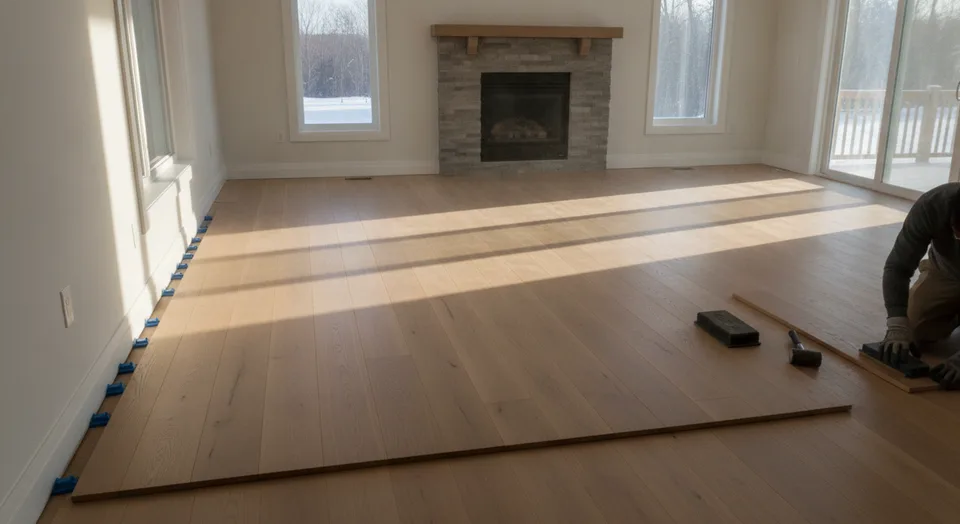
Guelph's housing stock splits cleanly, and the flooring problem changes with it. Downtown, in The Ward, Old University and around Exhibition Park, the houses are limestone-era and pre-war: original strip oak or maple hiding under two generations of carpet, floors that are out of level by half an inch across a room, plaster-era baseboards you cannot just pry off and reuse, and radiator pipes or gravity-furnace registers sitting exactly where you wanted a clean run of plank. In the south end — Westminster Woods, Clairfields, Pine Ridge, Grange Hill East — the houses are twenty years old or less and the job is almost always the opposite: tearing out builder-grade carpet and thin laminate and putting down LVP or engineered hardwood over an OSB subfloor that needs flattening first. Basements anywhere in the city are a moisture question before they are a flooring question. And out in the county — Rockwood, Eden Mills, Puslinch, Aberfoyle, Ariss, Fergus, Elora — you get farmhouses with wide pine plank subfloors and additions that meet the original house at a different height. A crew that only knows one of those does mediocre work on the rest. This is the booking line for a vetted Guelph flooring contractor that handles all of them. You describe the house, someone comes and measures, and you get a written quote before anything is ordered.
What We Install
Hardwood, engineered, LVP, laminate, tile, heated floors, carpet and stairs — plus the subfloor work underneath that decides whether any of it lasts.
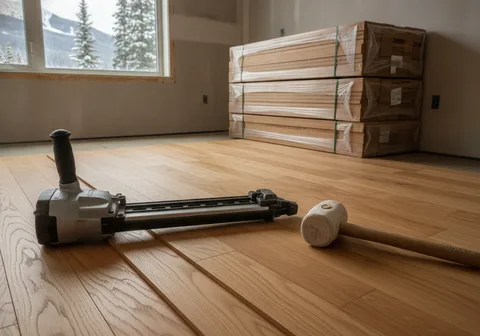
Hardwood Flooring Installation
Solid and engineered hardwood, installed over a subfloor that has been checked for flatness and moisture first — because that is what decides whether it stays flat.
Learn more →
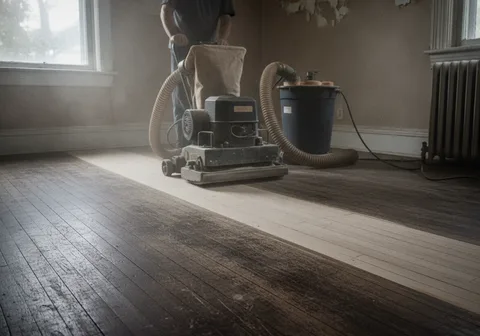
Hardwood Refinishing & Sanding
Sanding and refinishing original hardwood — usually the cheaper and better answer in a Guelph century home than tearing it out.
Learn more →
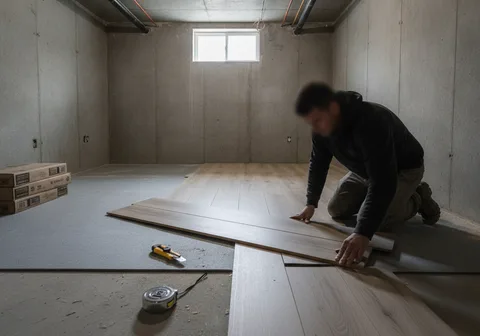
Luxury Vinyl Plank & Laminate
Rigid-core LVP and laminate over a subfloor that has been flattened first — the difference between a floor that stays quiet and one that clicks.
Learn more →
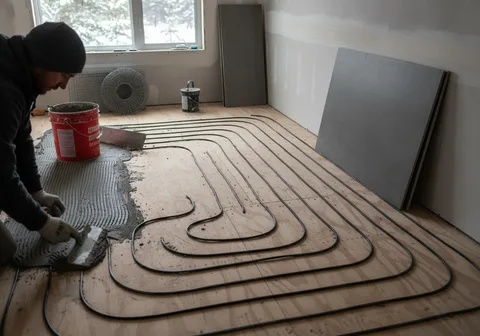
Tile & Heated Floors
Tile over a properly prepared and decoupled substrate, with electric in-floor heat where it makes the most difference — bathrooms, entries and tile over a cold slab.
Learn more →
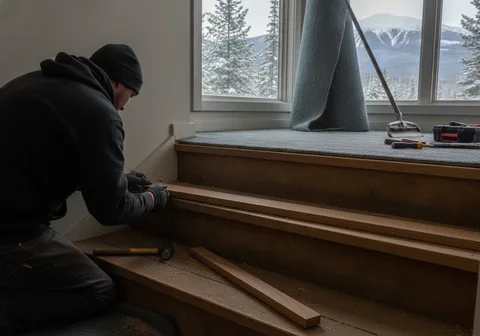
Stairs, Subfloors & Carpet
The work around and under the floor — capping stairs, nosings and railings, levelling and de-squeaking subfloors, and carpet where carpet is still the right answer.
Learn more →
Flooring Installation in Guelph: What the Housing Stock Actually Needs
Century homes downtown, The Ward, Old University and Exhibition Park. Most of these houses still have their original floor, and the first honest question is whether it should be refinished rather than replaced. Old-growth strip oak and maple from that era is denser and more stable than most of what you can buy today, and if it has not been sanded to death it will usually take another pass. We pull a floor register or lift a closet board to check the wear-layer thickness above the tongue before recommending anything. The complications are predictable. The joists have settled, so the floor is out of level and often has a dip toward a bearing wall. The baseboards are tall, painted many times, and often installed before the finish floor, which means either careful removal and reinstallation or a shoe moulding you did not plan on. Radiator supply pipes come up through the floor and need collars cut around them, not caulk. Floor and wall registers from the old gravity system have to be re-framed if the new floor is a different thickness. And there is often a layer cake underneath — linoleum, then hardboard, then plank — that has to come out before anyone knows what they are actually working on.
The south end: Westminster Woods, Clairfields, Pine Ridge and Grange Hill East. Different house, different job. These are 2000s-onward builds on engineered floor trusses with an OSB subfloor, and the work is almost always a rip-out: builder-grade carpet with thin underpad in the bedrooms and stairs, and a 7 or 8 mm laminate through the main floor that has started to chip at the joints around the kitchen. The replacement is usually rigid-core luxury vinyl plank or engineered hardwood. The catch on newer houses is flatness, not moisture. Open-concept main floors mean long uninterrupted runs, and a floating floor telegraphs every hump and dip in the OSB underneath it — you feel it as a soft spot or hear it as a hollow click six months later. Screwing off the subfloor to kill squeaks and skimming the low spots is not an upsell on these houses, it is the part that decides whether you are happy in year three.
Basements: the moisture question comes first. Guelph basements run the full range. Downtown and in the older east end you get rubble limestone and early block foundations with a slab poured later and often with no vapour barrier under it. South-end basements have a proper modern slab but still move vapour. Either way, concrete gives off moisture, and solid hardwood below grade is the one thing we will talk you out of every time. The sequence that works is: test the slab rather than guess, deal with any active water or efflorescence before flooring goes anywhere near it, then choose a system that tolerates what is left — a dimpled subfloor panel or a plywood sleeper assembly under engineered or LVP, or tile over an uncoupling membrane. Surface dampness and a musty smell are worth understanding before you spend money; CMHC's guidance on mould in housing is a reasonable starting point. A floor laid over a wet slab fails, and it fails in a way no warranty covers.
Rural Wellington County: Rockwood, Eden Mills, Fergus, Elora, Puslinch, Aberfoyle and Ariss. Farmhouse and stone-house renovations are their own category. The original floor is frequently wide plank pine, face-nailed, sometimes doing double duty as both subfloor and finish floor with nothing but joists underneath. Pine is soft, it dents, and it has usually been painted at some point, but it is also irreplaceable and worth saving where the boards are sound. Where it is not, the decision is whether to overlay with plywood and go modern or to patch in reclaimed stock and refinish. Additions built in the seventies and eighties almost never meet the original house at the same height, so transitions and a small step are part of the design rather than a mistake. Add a wood stove, a mudroom that does real work eight months of the year, and a septic and well rather than city services, and the priorities shift toward durability and repairability over anything else.
How a quote actually happens. You call or send the form with the basics: neighbourhood, rough square footage, which rooms, what is down now, and what you think you want. Someone comes out and measures properly — laser measure, moisture readings on the subfloor, a straightedge across the floor to see how far out of flat it is, and a look at what is under the existing covering where that can be done without wrecking anything. The quote comes back in writing with the material, the underlayment, the subfloor prep, the removal and disposal, the transitions and the trim listed separately, so you can see what you are paying for and change your mind on any line. Nothing is ordered until you sign off. If the floor opens up and something underneath is genuinely different from what was visible, you get a call before extra work starts, not an invoice afterward.
Serving Guelph & Surrounding Areas
Structural and stair requirements for flooring work are set by Ontario's Building Code, which governs things like stair rise and run consistency and guard and handrail requirements when a staircase is rebuilt. Electric in-floor heating is electrical work: in Ontario it falls under the Electrical Safety Authority, and a heated floor should be installed on the correct circuit and inspected. Concrete slabs and older basements carry moisture, and CMHC covers mould in housing — relevant to any Guelph basement floor, because flooring can cover damp but cannot fix it. Finishes, adhesives and new flooring off-gas while they cure; Health Canada publishes general indoor air quality guidance worth reading if anyone in the house is sensitive. Anyone working in your home should be covered by WSIB.
Frequently Asked Questions
How much does flooring installation cost in Guelph?
It depends far more on the subfloor and the material than on the square footage. As a planning figure, most Guelph jobs land somewhere between $6 and $16 per square foot supplied and installed, with luxury vinyl plank at the low end, engineered hardwood in the middle and solid hardwood or tile at the top. Refinishing an existing hardwood floor is usually cheaper than replacing it. Full planning ranges, including subfloor prep and stairs, are on the 2026 cost guide. You get a firm written quote after the floor is measured, not before.
I have original hardwood under the carpet. Refinish it or replace it?
Usually refinish, if it is structurally sound. Old-growth oak and maple in Guelph's pre-war houses is better material than most new hardwood, and refinishing costs meaningfully less than tearing out and replacing. The thing that decides it is how much wood is left above the tongue — a floor that has already been sanded three or four times may have nothing left to take. That gets checked by lifting a board in a closet or pulling a register, not by guessing from the doorway. Water damage, pet stains that have gone through the finish into the wood, and large areas of missing or cupped boards can push the decision the other way.
Can I put hardwood in my basement?
Solid hardwood, no. Concrete moves moisture upward year-round and solid wood responds to it by cupping, gapping and eventually letting go of the fasteners. Engineered hardwood over a properly detailed subfloor system, rigid-core LVP, or tile over an uncoupling membrane are the three that hold up below grade in Guelph. Whichever you pick, the slab gets tested first and any active water problem gets dealt with before flooring goes down.
How long does a flooring job take?
A single main floor of LVP or laminate in a south-end house is usually one to two days once the old flooring is out. Engineered or solid hardwood on the same footprint runs two to four days, plus acclimation time before the install starts. Sand-and-refinish on an existing hardwood floor is typically three to five days including cure time, and you stay off it for most of that. Tile is slower than people expect because of set and grout time. Subfloor levelling, stairs and a house that needs everything moved add days on top. The written quote gives you a schedule, not just a price.
Which parts of Guelph and Wellington County do you cover?
All of Guelph — downtown and The Ward, Old University, Exhibition Park, the Junction and the older west end, Willow West, Grange Hill East, and the whole south end through Westminster Woods, Clairfields and Pine Ridge. Outside the city we work through Rockwood, Eden Mills, Puslinch, Aberfoyle, Ariss, Fergus and Elora. Travel to the county is factored into the quote up front rather than added at the end.
Do you move the furniture and take away the old flooring?
Yes to both, and both are quoted as separate lines so you can do part of it yourself if you want to bring the number down. Moving furniture and emptying closets is the most common thing homeowners handle. Old carpet, underpad, tack strip and laminate come out and go for disposal. Anything that might contain asbestos — old sheet vinyl, the black cutback adhesive under it, or 9x9 tiles common in pre-1980 Guelph houses — is not disturbed until it has been tested, and that is testing done by someone qualified to do it, not a guess on site.
Ready to Get Started?
Call 548-490-8565 or send the form for a written quote for flooring installation in Guelph.